45
The search for new products


00:00
00:00

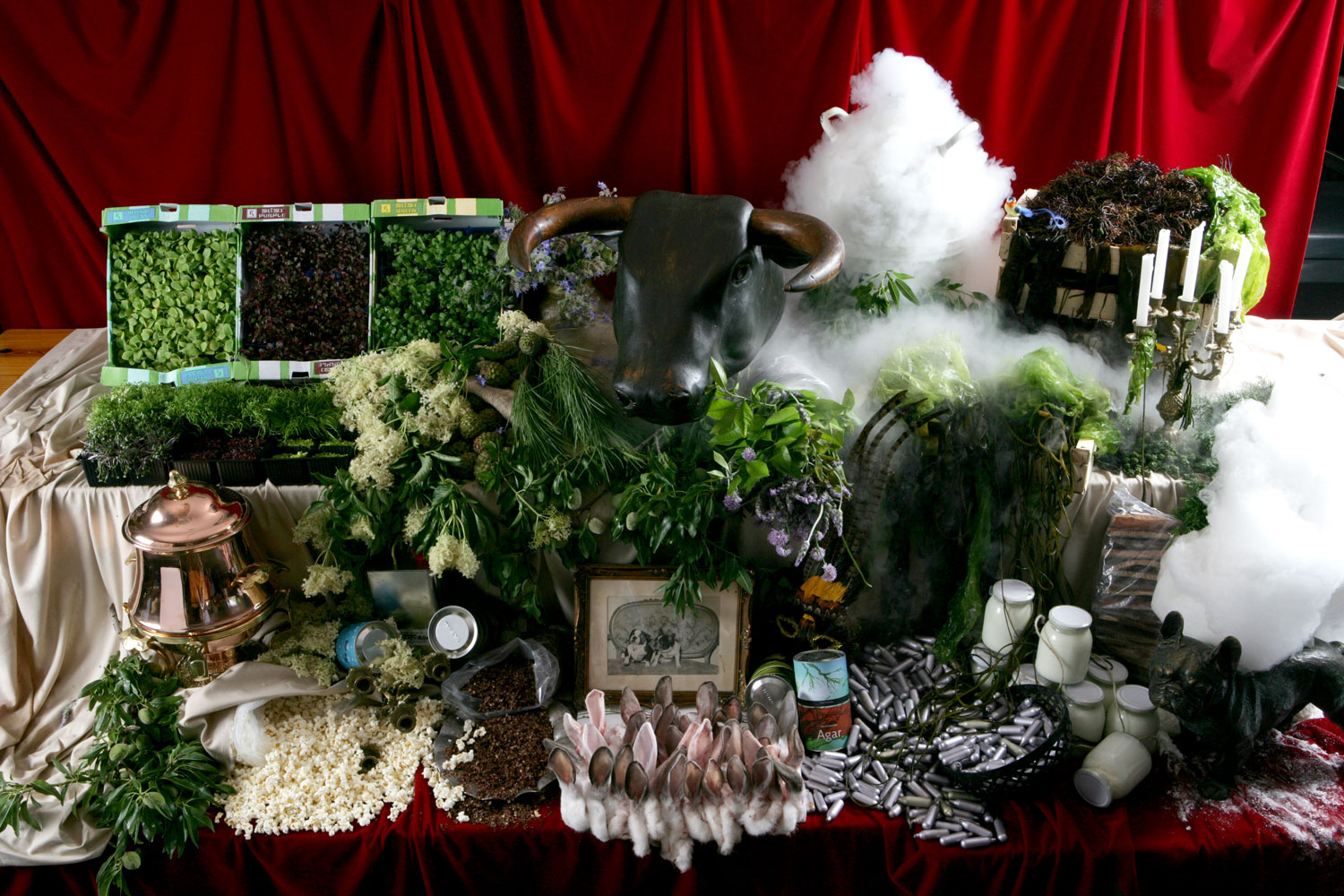
The search for new products, whether unelaborated or elaborated, has always been essential to elBullirestaurante’s creative method. The restaurant has based its philosophy on the way it understands these products, which are evaluated for their gastronomic value; in other words, on the possibilities they offer for culinary creation, not on their price.
This hard work has led to the incorporation of new edible products that had never before been used in a Western fine-dining restaurant. It has also had a great influence on new generations of professional cooks: in popular restaurants, in domestic kitchens and even in the food industry.
This hard work has led to the incorporation of new edible products that had never before been used in a Western fine-dining restaurant. It has also had a great influence on new generations of professional cooks: in popular restaurants, in domestic kitchens and even in the food industry.
Understanding products
In a restaurant, products are a raw material, a resource that makes possible the daily reproduction of the gastronomic offering, and they have a direct impact on the customer’s experience. Without products, there can be no cooking. In short, products are the main resource for culinary creations.
Products can be divided into two main categories: gastronomic products and non-gastronomic products (depending on whether or not they have a culinary use). If we focus on gastronomic products, these can be divided into edible and inedible products.
The latter group includes tools, which are also considered products and will be the subject of the next installation in the exhibition.
As for edible gastronomic products, as you will have discovered in the installation dedicated to taxonomies, these can be subdivided into two groups:
Products can be divided into two main categories: gastronomic products and non-gastronomic products (depending on whether or not they have a culinary use). If we focus on gastronomic products, these can be divided into edible and inedible products.
The latter group includes tools, which are also considered products and will be the subject of the next installation in the exhibition.
As for edible gastronomic products, as you will have discovered in the installation dedicated to taxonomies, these can be subdivided into two groups:
-
The first group is that of unelaborated products, both natural, if they are wild and exist in nature without the need for human intervention, and artificial, if they are reared or cultivated by humans through the domestication of species.
-
The second group is that of elaborated products. These are produced by the food industry or on a small scale by artisans and are purchased by cooks (amateur or professional) who incorporate them in an elaboration process. However, elaborated products can sometimes be consumed directly, if they are plated, served and offered for tasting as elaborations.
The main difference between both types of products lies in how they reach the consumer (in our case, at the restaurant) and how they are used.
We assume that an elaborated product has already been ‘cooked’, while an unelaborated product will almost always requires at least one pre-processing procedure before it can be consumed.
New products can be found in other cultures or countries and used in a different context, or rediscovered – when a new variety is created or a characteristic of an already existing product is modified, for example, or when parts of a previously unused product are analysed and used.
We assume that an elaborated product has already been ‘cooked’, while an unelaborated product will almost always requires at least one pre-processing procedure before it can be consumed.
New products can be found in other cultures or countries and used in a different context, or rediscovered – when a new variety is created or a characteristic of an already existing product is modified, for example, or when parts of a previously unused product are analysed and used.

