57
elBulli. G Pavilion at documenta 12


00:00
00:00

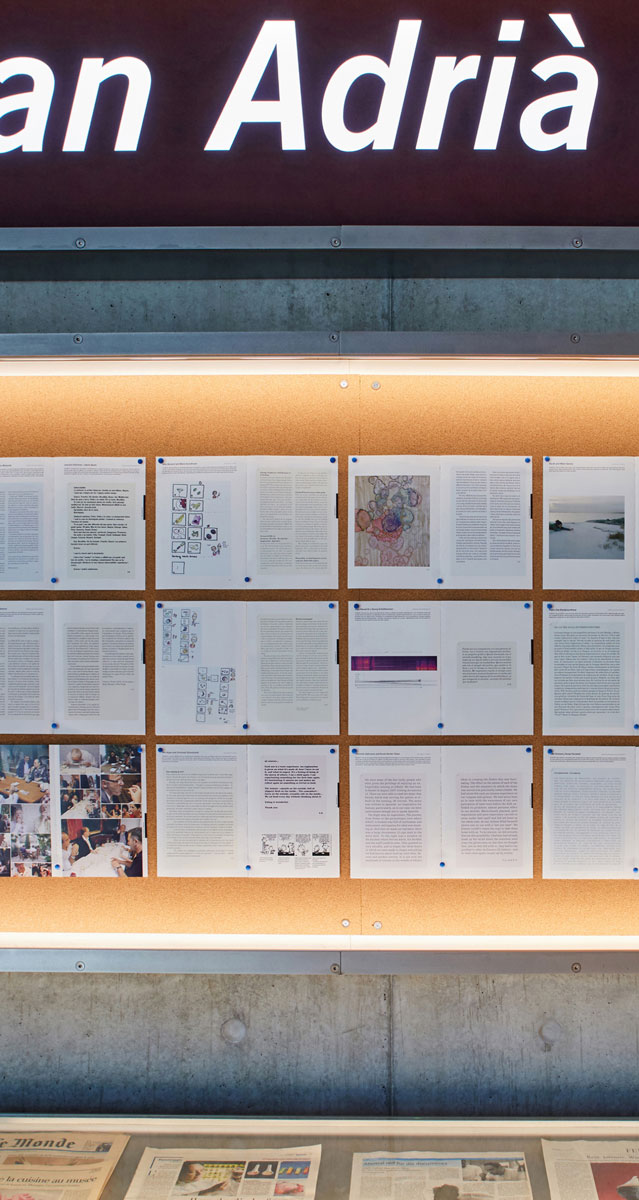
In 2007, one of the world’s most influential exhibitions of contemporary art, documenta Kassel, invited a chef to take part as a featured artist for the very first time in history. The decision caused a great outcry in the art world and specialist media. Although it was a disruptive and highly controversial act, it also encouraged an enlightening debate as to whether cooking could be an artistic discipline.
Roger M. Buergel, the curator of the exhibition, justified his choice to thousands of journalists: ‘I invited Ferran Adrià because he has managed to create his own language, which has become very influential on the international scene. This is what I am interested in, not whether people consider it art or not.’
In preparation for this intervention, Ferran Adrià, supported by Juli Soler as well as Roger M. Buergel and his wife Ruth Noack, both of whom were the main organisers of documenta 12, reflected deeply on his relationship with art in order to decide what type of intervention should or could be presented.
The answer to this question was not revealed until the actual day of the presentation, on 13 June 2007, leaving the question open until the very last minute.
After a great deal of thought, elBulli, at Cala Montjoi, would be turned into Pavilion G of the exhibition. The reason for this was twofold: it underscored the fact that the elBulli experience could not be decontextualised from the restaurant, and it also encouraged debate around artistic disciplines that have no place in a museum.
Every day during the 100 days that documenta ran, two visitors to the event at Kassel would travel to elBulli to dine, forming a connection between the two sites, Kassel and Cala Montjoi. Consequently, every customer who dined at the restaurant between 16 June and 23 September 2007 received a menu printed with the documenta logo, because they were also considered visitors to the exhibition.
Confusion and controversy were at a peak, achieving the ultimate goal of opening a debate on the relationship between cooking and art.
Roger M. Buergel, the curator of the exhibition, justified his choice to thousands of journalists: ‘I invited Ferran Adrià because he has managed to create his own language, which has become very influential on the international scene. This is what I am interested in, not whether people consider it art or not.’
In preparation for this intervention, Ferran Adrià, supported by Juli Soler as well as Roger M. Buergel and his wife Ruth Noack, both of whom were the main organisers of documenta 12, reflected deeply on his relationship with art in order to decide what type of intervention should or could be presented.
The answer to this question was not revealed until the actual day of the presentation, on 13 June 2007, leaving the question open until the very last minute.
After a great deal of thought, elBulli, at Cala Montjoi, would be turned into Pavilion G of the exhibition. The reason for this was twofold: it underscored the fact that the elBulli experience could not be decontextualised from the restaurant, and it also encouraged debate around artistic disciplines that have no place in a museum.
Every day during the 100 days that documenta ran, two visitors to the event at Kassel would travel to elBulli to dine, forming a connection between the two sites, Kassel and Cala Montjoi. Consequently, every customer who dined at the restaurant between 16 June and 23 September 2007 received a menu printed with the documenta logo, because they were also considered visitors to the exhibition.
Confusion and controversy were at a peak, achieving the ultimate goal of opening a debate on the relationship between cooking and art.
Documenting documenta
Documenting documenta, episode 15 of the documentary series El Bulli: The Story of a Dream compiles testimonies from artists, museum directors and curators to offer, for the first time, a reflection on what place cutting-edge cooking has within the world of modern art.
Among those chosen for this role were Vicent Todolí, a prestigious international curator and former director of the Tate Modern London, and elBulli’s longest-standing customer, Richard Hamilton, the artist and pop art icon who was fortunate enough to witness the restaurant's evolution from 1963 to the final season in spring 2011.
According to Ferran Adrià: ‘This documentary is a tribute to Richard Hamilton, a great artist and good friend, who bore witness to my entire evolution within elBulli.’
Script and direction: David Pujol / Executive producer: Visual 13 (Marta Puigsegur) / Music: Pascal Comelade / Cinematography: Román Martínez de Bujo / Post-production director: Vicenç Asensio / Editing: Diego Cárcoba
Duration: 72 minutes
Among those chosen for this role were Vicent Todolí, a prestigious international curator and former director of the Tate Modern London, and elBulli’s longest-standing customer, Richard Hamilton, the artist and pop art icon who was fortunate enough to witness the restaurant's evolution from 1963 to the final season in spring 2011.
According to Ferran Adrià: ‘This documentary is a tribute to Richard Hamilton, a great artist and good friend, who bore witness to my entire evolution within elBulli.’
Script and direction: David Pujol / Executive producer: Visual 13 (Marta Puigsegur) / Music: Pascal Comelade / Cinematography: Román Martínez de Bujo / Post-production director: Vicenç Asensio / Editing: Diego Cárcoba
Duration: 72 minutes
Food for thought
Thought for Food: A Reflection on the Creative Universe of Ferran Adria
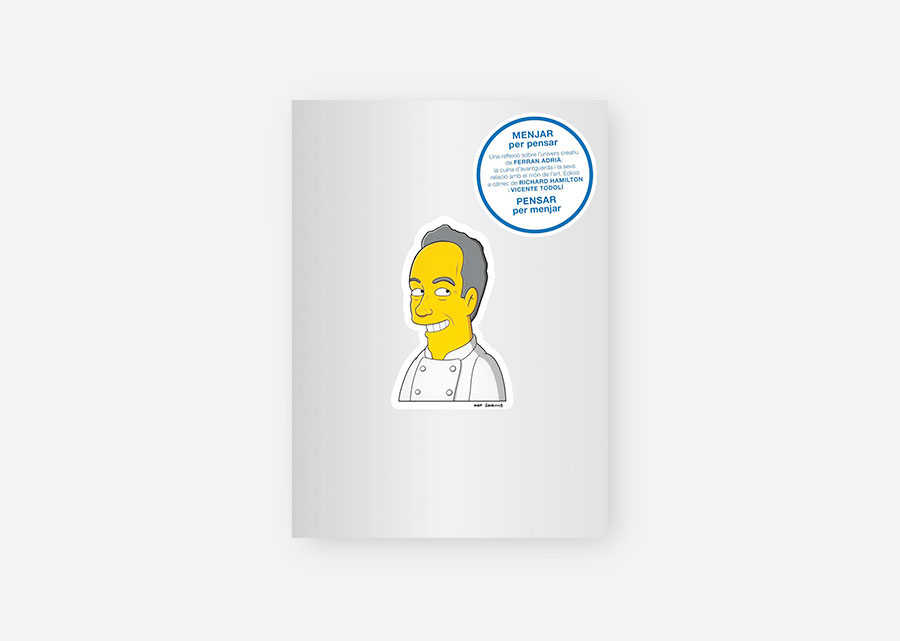
A casual conversation between Richard Hamilton, Vicent Todolí and Ferran Adrià led to the idea of capturing the chef’s experience of documenta 12.
Food for Thought. Thought for Food attempts to decode the creative processes behind this one-of-a-kind gastronomic-artistic project.
In addition to narrating the documenta experience, the book questions the boundaries of creativity, language, art and their different media for expression.
Its pages reproduce the testimonies recorded by the guests who were seated at the ‘documenta table’ at elBulli for the duration of the exhibition, and the opinions garnered from renowned figures in the worlds of art and cuisine, who took part in two high-calibre round table discussions for the purpose of demarcating or blurring, as the case might be, the boundaries between cooking and art.
Among its content, the book includes the most complete selection of theoretical texts related to the elBulli and Ferran Adrià’s philosophy, which are arranged in a manner to make them easier to read.
The editing of the book was entrusted to Richard Hamilton and Vicent Todolí, who designed the concept of the book and decided on its content. The book’s graphic design was the work of Fernando Gutiérrez, and Cristina Giménez was responsible for its editorial coordination.
The illustration on the front cover is a portrait of Ferran Adrià by Matt Groening, a gift from the producer James L. Brooks. He was so amazed by his experience of dining at elBulli that he commissioned Matt Groening to make a portrait of Ferran Adrià, as well as another of Juli Soler.
Food for Thought. Thought for Food attempts to decode the creative processes behind this one-of-a-kind gastronomic-artistic project.
In addition to narrating the documenta experience, the book questions the boundaries of creativity, language, art and their different media for expression.
Its pages reproduce the testimonies recorded by the guests who were seated at the ‘documenta table’ at elBulli for the duration of the exhibition, and the opinions garnered from renowned figures in the worlds of art and cuisine, who took part in two high-calibre round table discussions for the purpose of demarcating or blurring, as the case might be, the boundaries between cooking and art.
Among its content, the book includes the most complete selection of theoretical texts related to the elBulli and Ferran Adrià’s philosophy, which are arranged in a manner to make them easier to read.
The editing of the book was entrusted to Richard Hamilton and Vicent Todolí, who designed the concept of the book and decided on its content. The book’s graphic design was the work of Fernando Gutiérrez, and Cristina Giménez was responsible for its editorial coordination.
The illustration on the front cover is a portrait of Ferran Adrià by Matt Groening, a gift from the producer James L. Brooks. He was so amazed by his experience of dining at elBulli that he commissioned Matt Groening to make a portrait of Ferran Adrià, as well as another of Juli Soler.

