


00:00
00:00

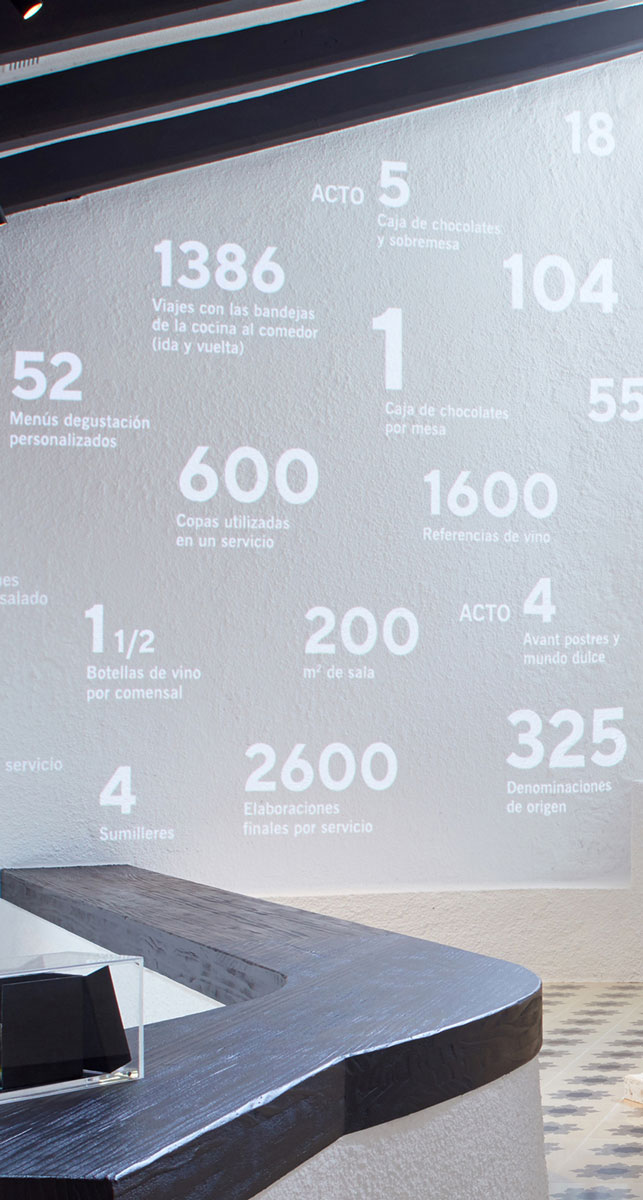
In the context of fine-dining restaurants, this is where elBullirestaurante stood apart from the rest. It upheld a high standard of professional service with naturalness, coordination and mutual support between team members. The application of this philosophy allowed the service to be managed perfectly, enabling it to cope with staging a large volume of elaborations without losing rhythm.
-
With his exceptional personality, Juli Soler led the front-of-house team and instilled a style of high-standard service with an informal approach. He engaged with customers in a comfortable and casual atmosphere, without the strict codes that were typical of fine-dining establishments.
-
The front-of-house team was in symbiosis with the kitchen as it was constantly evolving and exploring the limits of the gastronomic experience.
-
This is an essential aspect of the overall organisation prior to the service and its staging as the transmitter of an experience and setter of the pace at which it was to unfold.
-
-
This revolution entailed a structural change in the experience, in the communication with customers and in the organisation that the service had to implement:
-
Specialisation in exclusive service of a tasting menu tailored to each diner.
-
Design of a particular reservation system that allowed meticulous management of all the aspects to be taken consideration.
-
Incorporation of technological resources as the necessary complement for personalised service.
-
Development of a new way of serving food.
-
-
The fragile nature of many of the elaborations brought about a need to finish them at the table, turning the waiting staff into an extension of the kitchen within the dining room.
-
Incorporation of plating and tasting utensils from the world of cooking.
-
Culmination of the symbiosis between kitchen and front-of-house teams with chefs playing a role in the dining room at certain times of the service, whether this involved transferring, finishing or presenting the elaborations.
-
In some cases, diners themselves would finish the elaborations, enhancing their interaction and involvement as active experiential agents.
-
-
New experiences in the world of beverages were integrated, which added to the development and advancement of the wine offering and offerings from the world of cuisine in this field (starting with the appearance of welcome cocktails elaborated in the kitchen, in 1998).
-
Soda siphons: Mojito (2001) and carbonated beverages (2007)
-
The world of coffee: Espesso (2003) and Passion Me (2004)
-
Liquid nitrogen: Nitro-caipirinha (2004)
-
Instant fresh juices (2007)
-
The world of post-prandial infusions: Herb garden (2008)
-
A new concept in ice for mixed drinks: Nice-projects (2008)
-
The electronic wine list (2005)
-
-
Table settings were simplified, with a shift from tables filled with implements and decorative items to a minimalist aesthetic, where tasting utensils only appeared at the exact moment they were required.
-
The presentation of elaborations to customers became more precise and natural, using a more concise and enticing language that conveyed only what was necessary to open the diners’ minds and improve their understanding of the experience.
-
The waiting staff used a language that expressed creativity, harmony, beauty, poetry, happiness, complexity, magic, humour, provocation and culture.
-
Creation of database with clear concepts of each elaboration that the waiting staff needed to know: wording, content, techniques and concepts, placement and, finally, recommendations to give diners on how to taste the elaboration.
-
-
Breaking with the concept of a hierarchical/pyramid structure of service, implementing a horizontal structure in which, although a certain hierarchy still existed, action was based on versatility and mutual support.
-
This concept of versatility was applied to other systems in the organisation, such as sales, marketing and communication, and infrastructure, thereby optimising resources.
-
The front-of-house staff took on roles that went beyond those of serving.
-
-
The waiting staff were consolidated as guides for the experience, from the moment customers arrived and right through to the end, and beyond.
-
Human values, such as affection, passion for a profession and naturalness, were added to professionalism to consolidate a very different form of customer service in the world of fine dining.
-

