Plan Genhesis. Plan de empresa para la restauración
68.00€
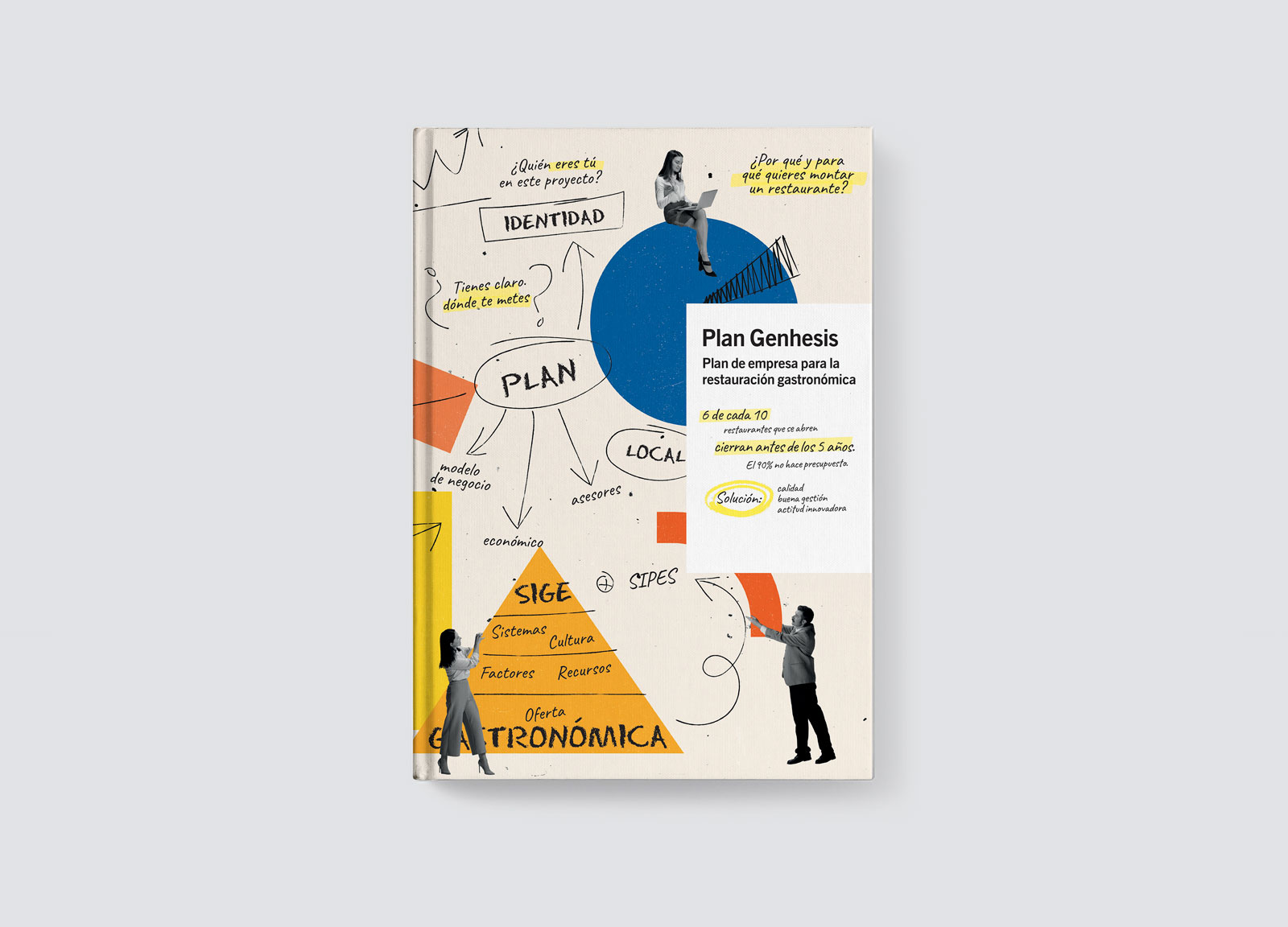
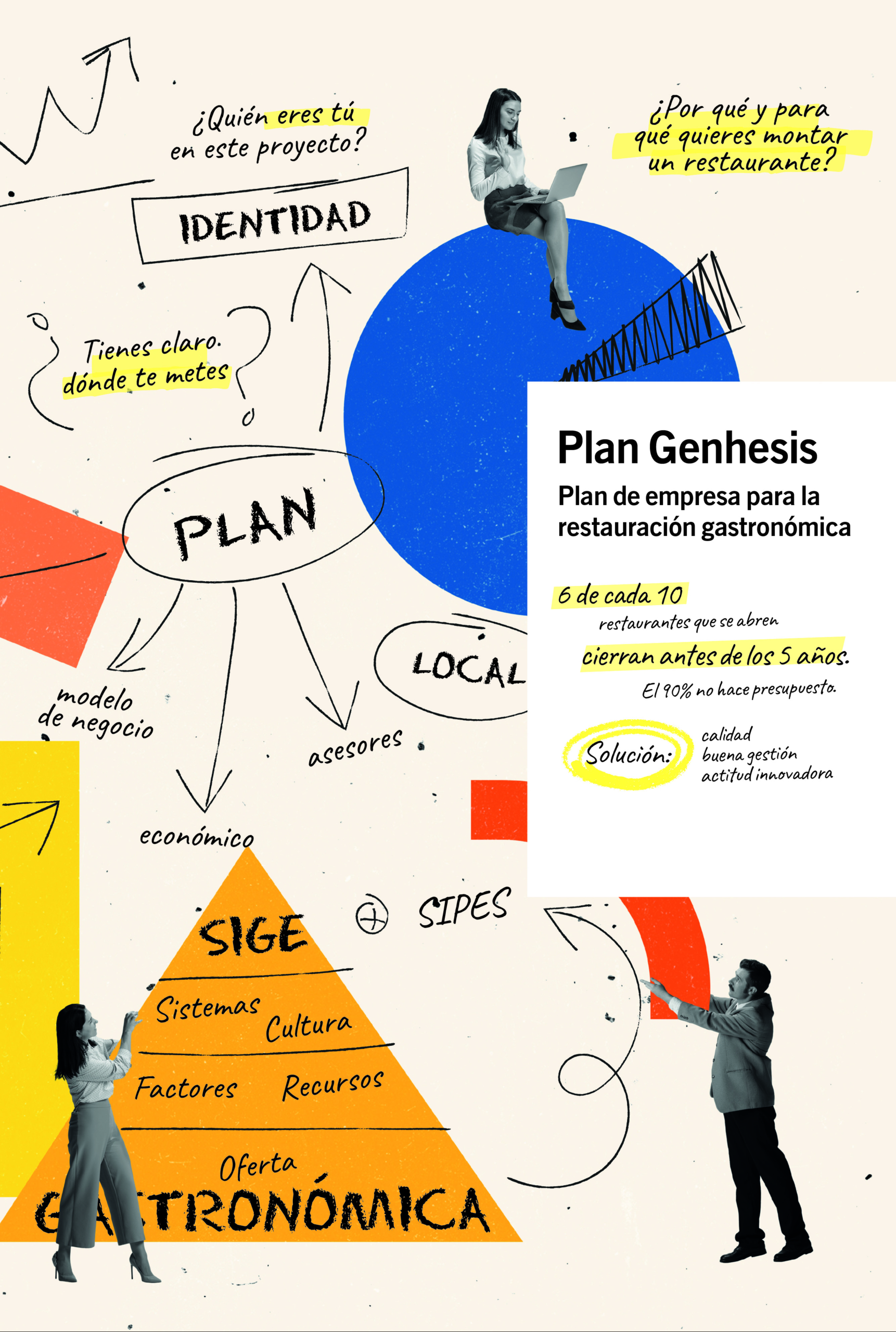
Plan Genhesis. Plan de empresa para la restauración gastronómica is a practical and rigorous guide to designing and managing a restaurant from a business perspective. Applying the Sapiens methodology, the book connects all the key decisions of a project—business model, economic planning, opening and management—through a systemic and applied approach. Conceived as a living tool, it is complemented by digital resources that facilitate its use in day-to-day operations. A work aimed at those who want to better understand gastronomic hospitality and increase the chances of success of their business.
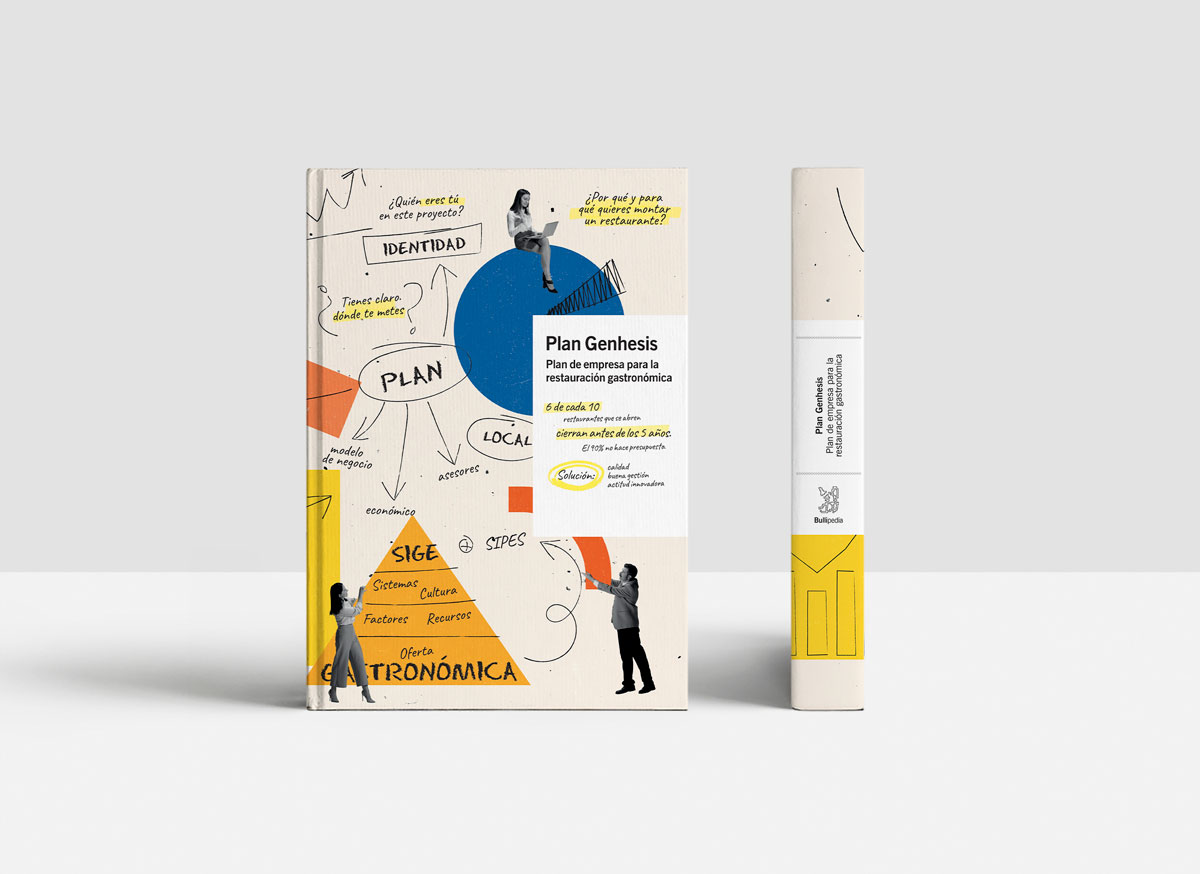
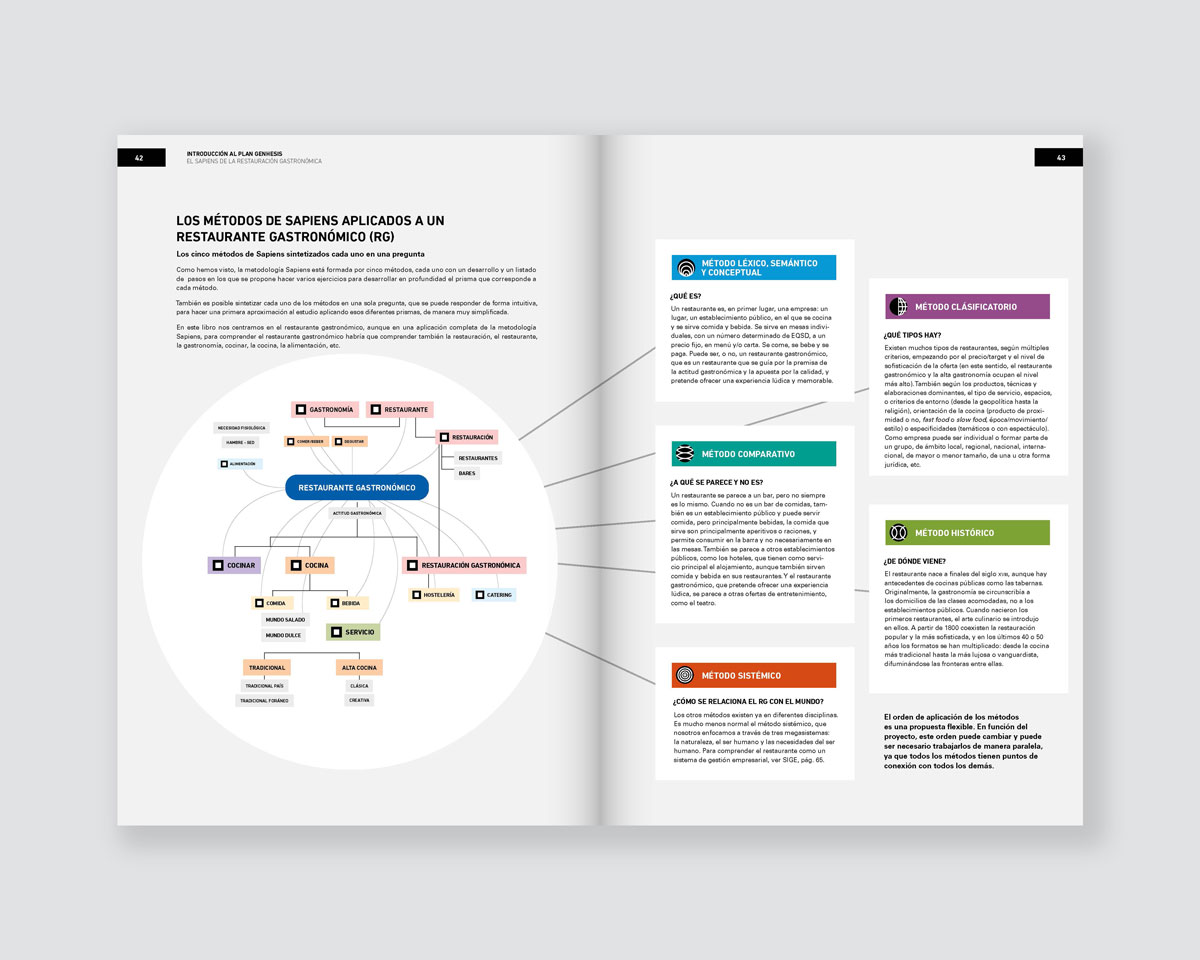
Plan GENHESIS. The business plan for gastronomic restaurants is a work conceived to help understand, design and manage a restaurant from a business perspective. Applying the Sapiens methodology developed by elBullifoundation, the book proposes a systemic approach that helps organise the complexity of gastronomic hospitality and connect all the decisions involved in a project.
The book opens with the presentation of the conceptual framework on which the entire work is built. This first section sets out the foundations of the Sapiens methodology, general systems theory and systemic thinking, and explains how these disciplines are integrated into the SIGE (Integrated Business Management System). Based on this framework, the Sapiens of gastronomic hospitality is developed and the role of the restaurant in today’s economy is contextualised. This section concludes with ten key questions that help the reader understand, analyse and organise what a gastronomic restaurant is—and how it works.
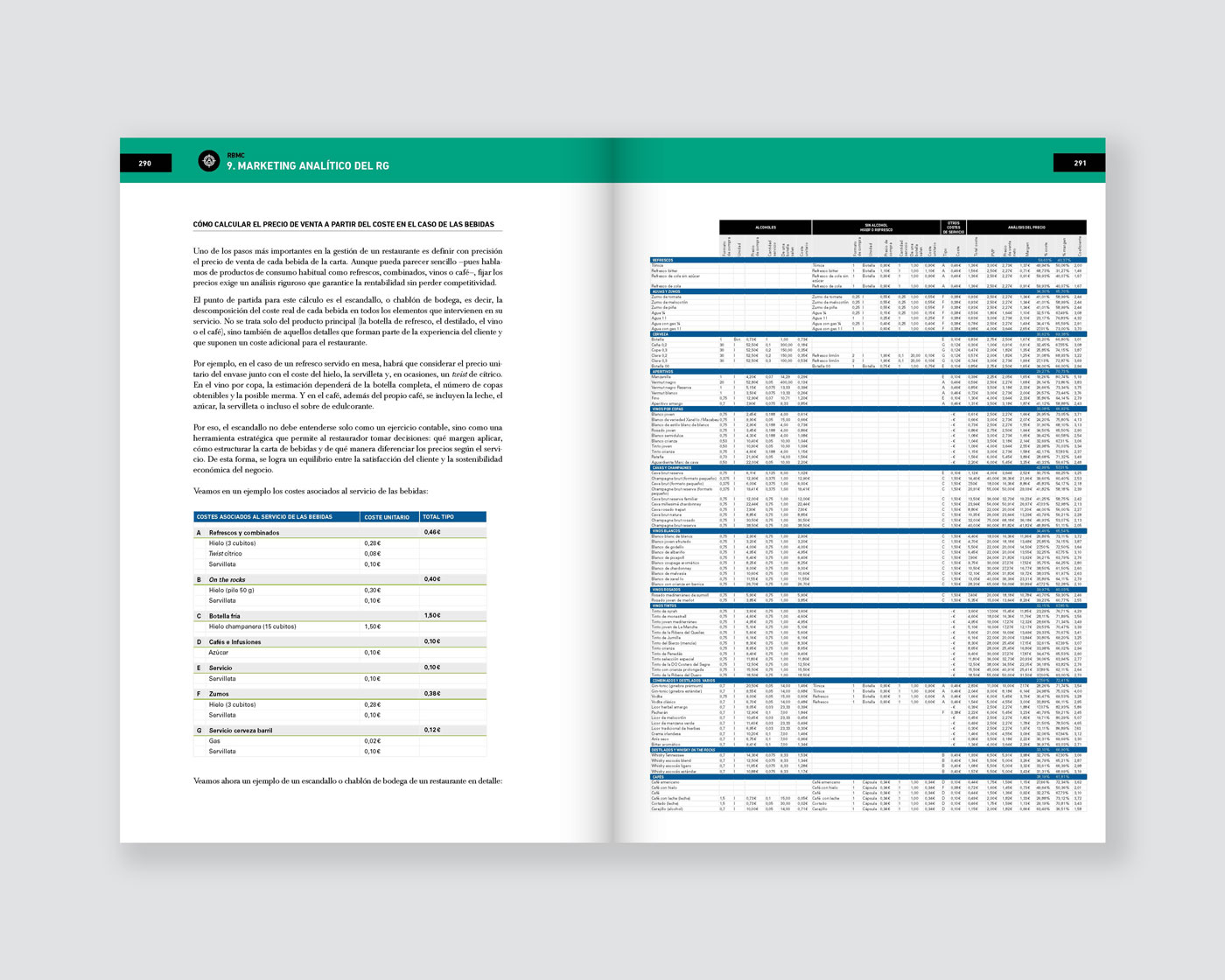
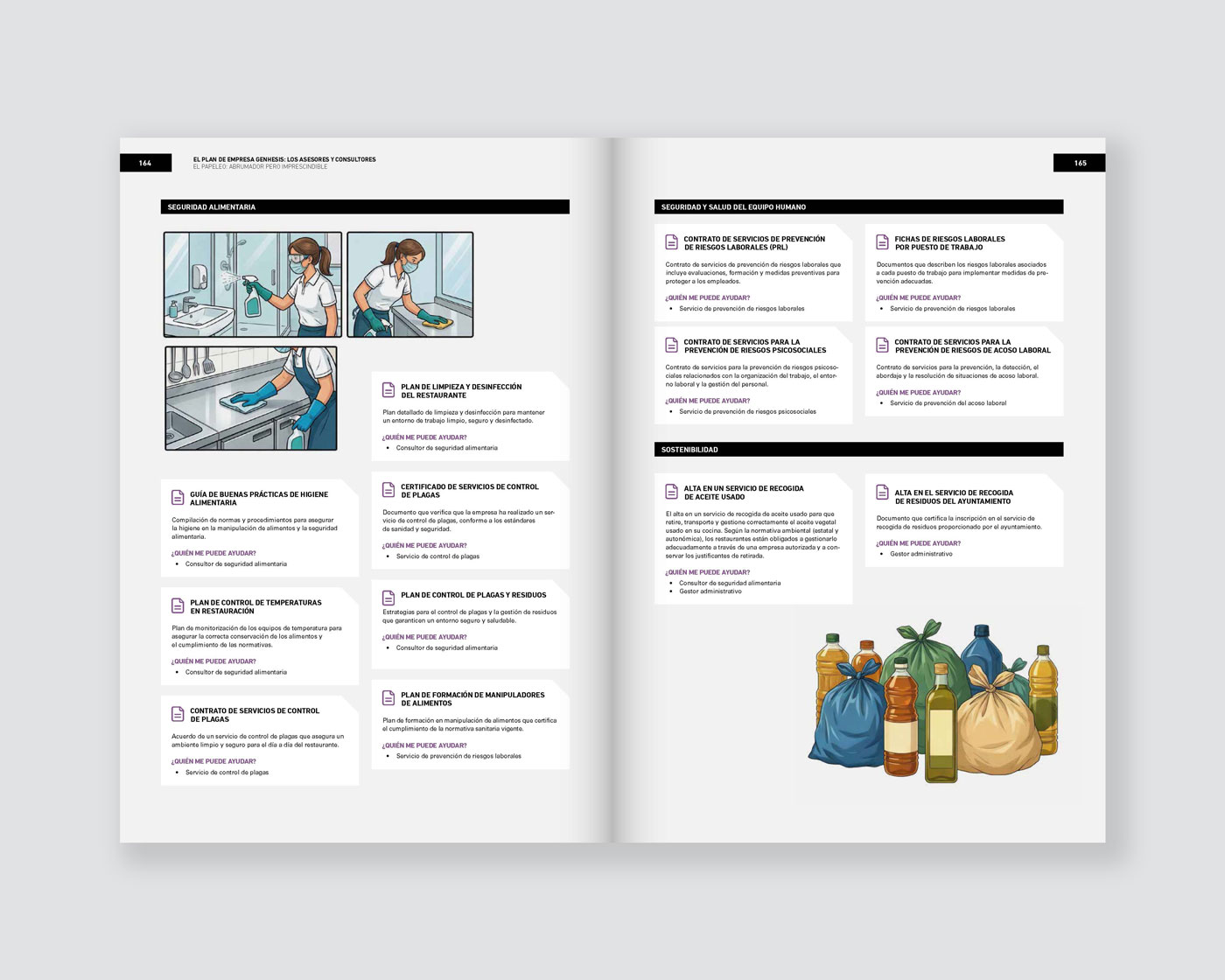
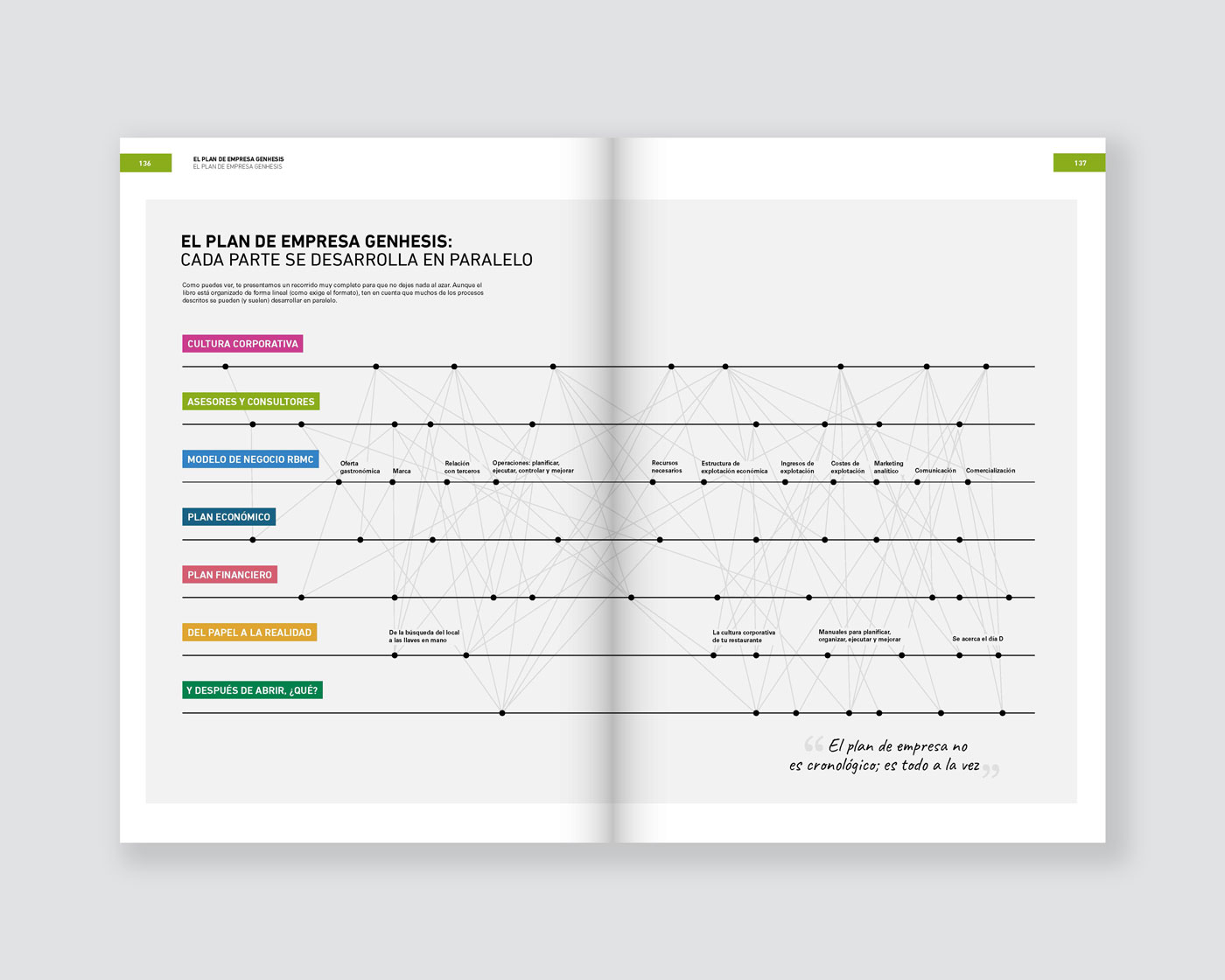
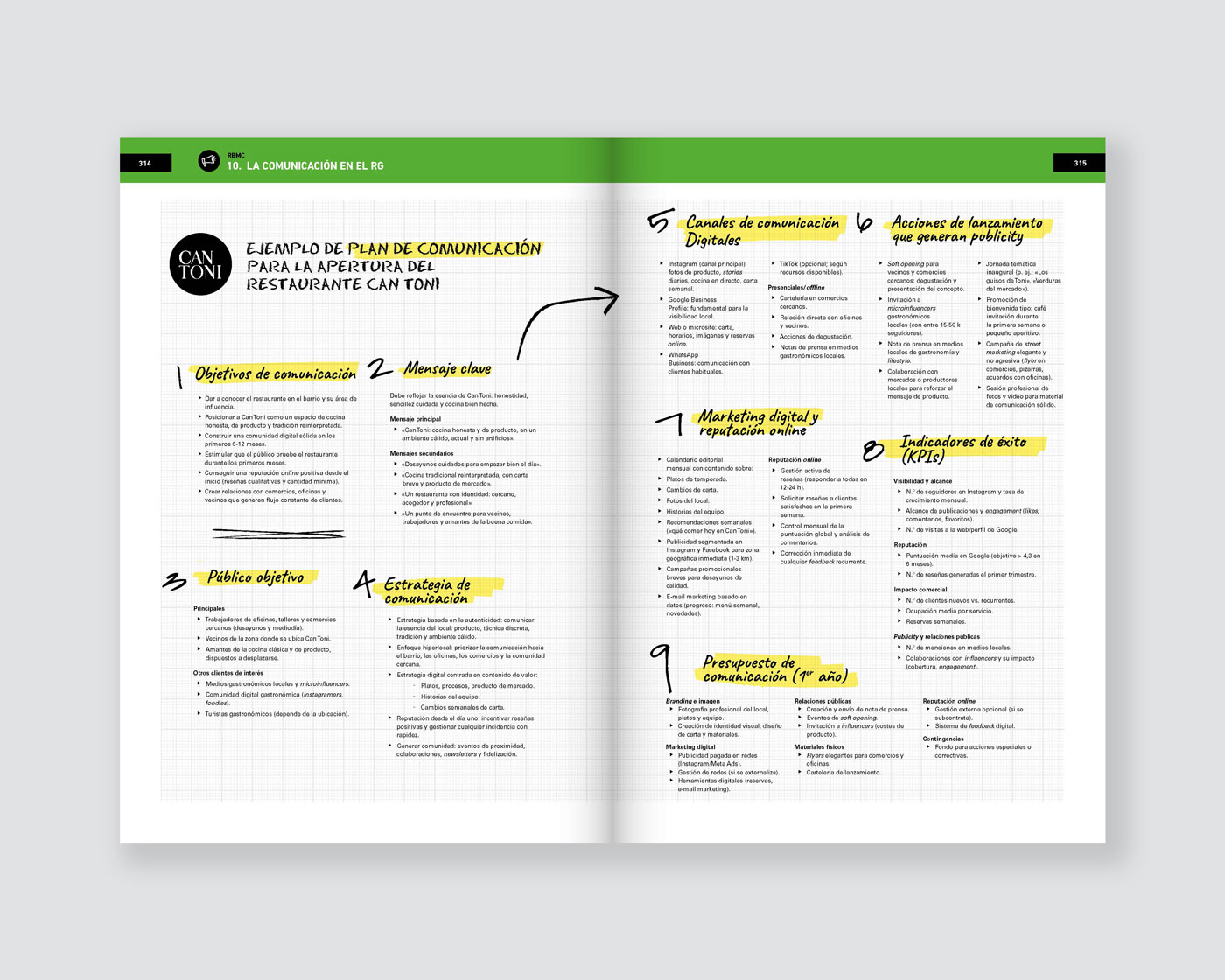
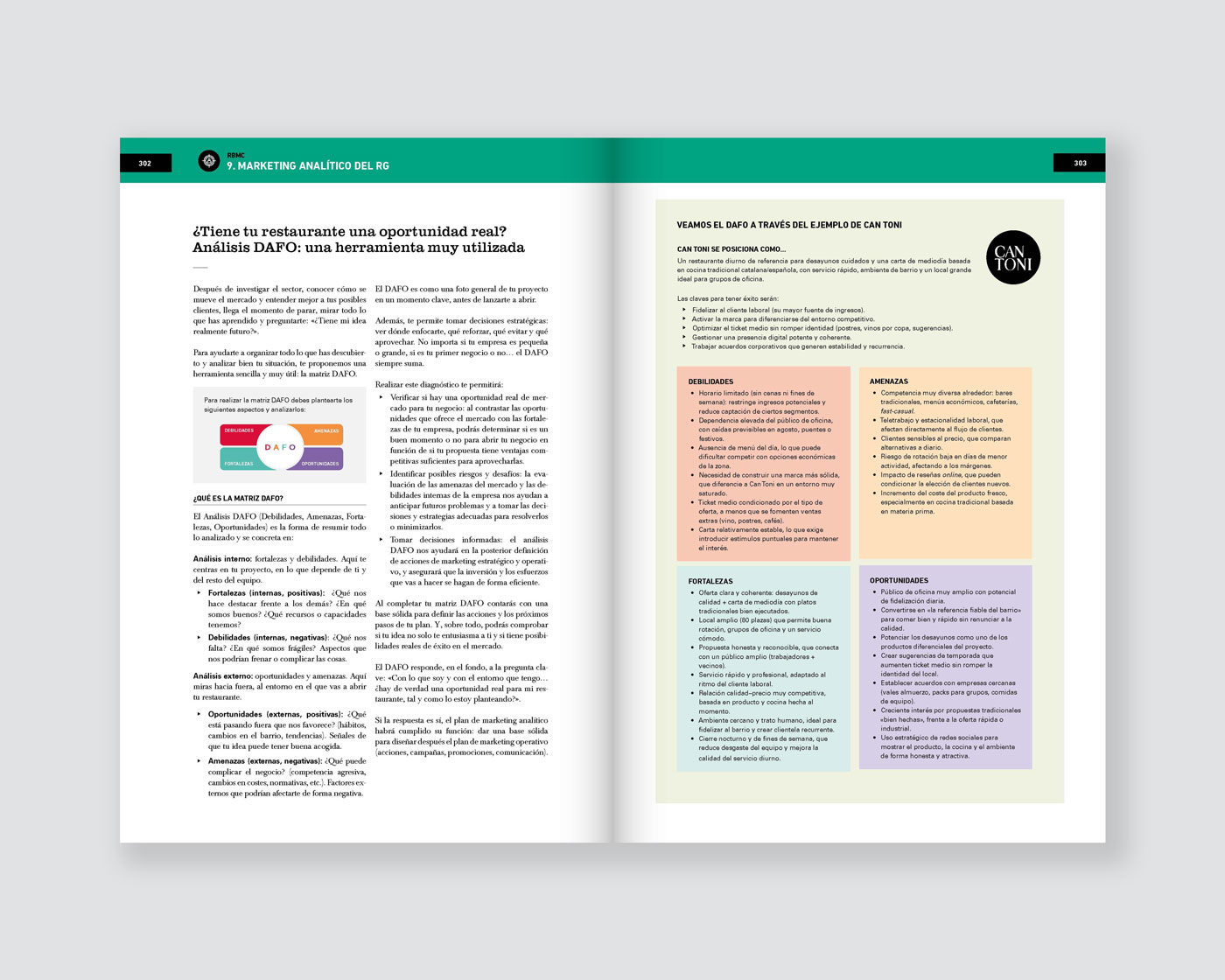
The book then delves into the development of the GENHESIS business plan, addressing the fundamental pillars of the project. This section explores aspects such as advisors and consultants, corporate culture, the business model, and the economic and financial plan. This is where the key strategic decisions are made, starting with defining why and for what purpose a restaurant is to be created. The business model is designed using the RBMC (Restaurant Business Model Canvas), an adaptation of the Canvas model to the specific reality of gastronomic hospitality.
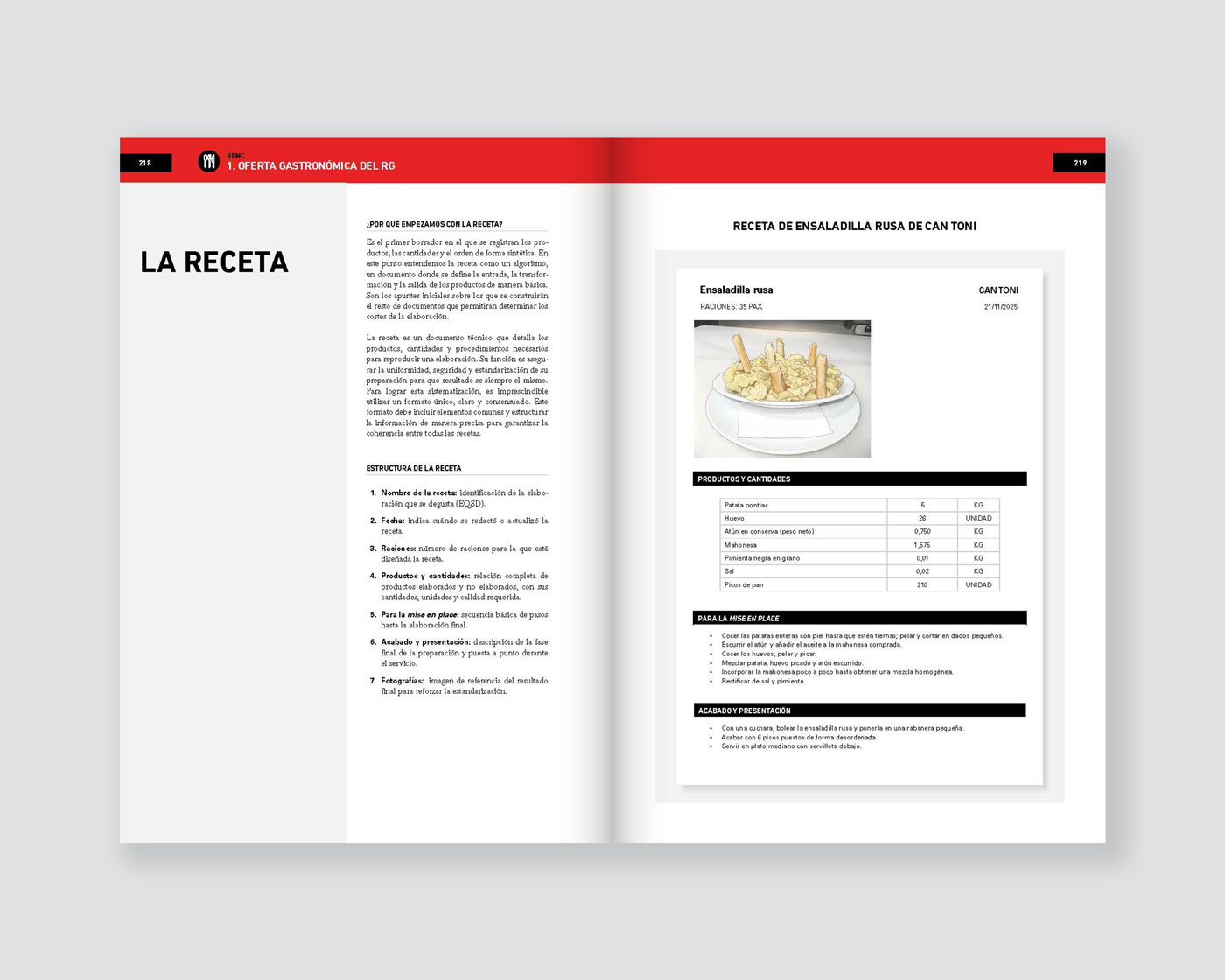
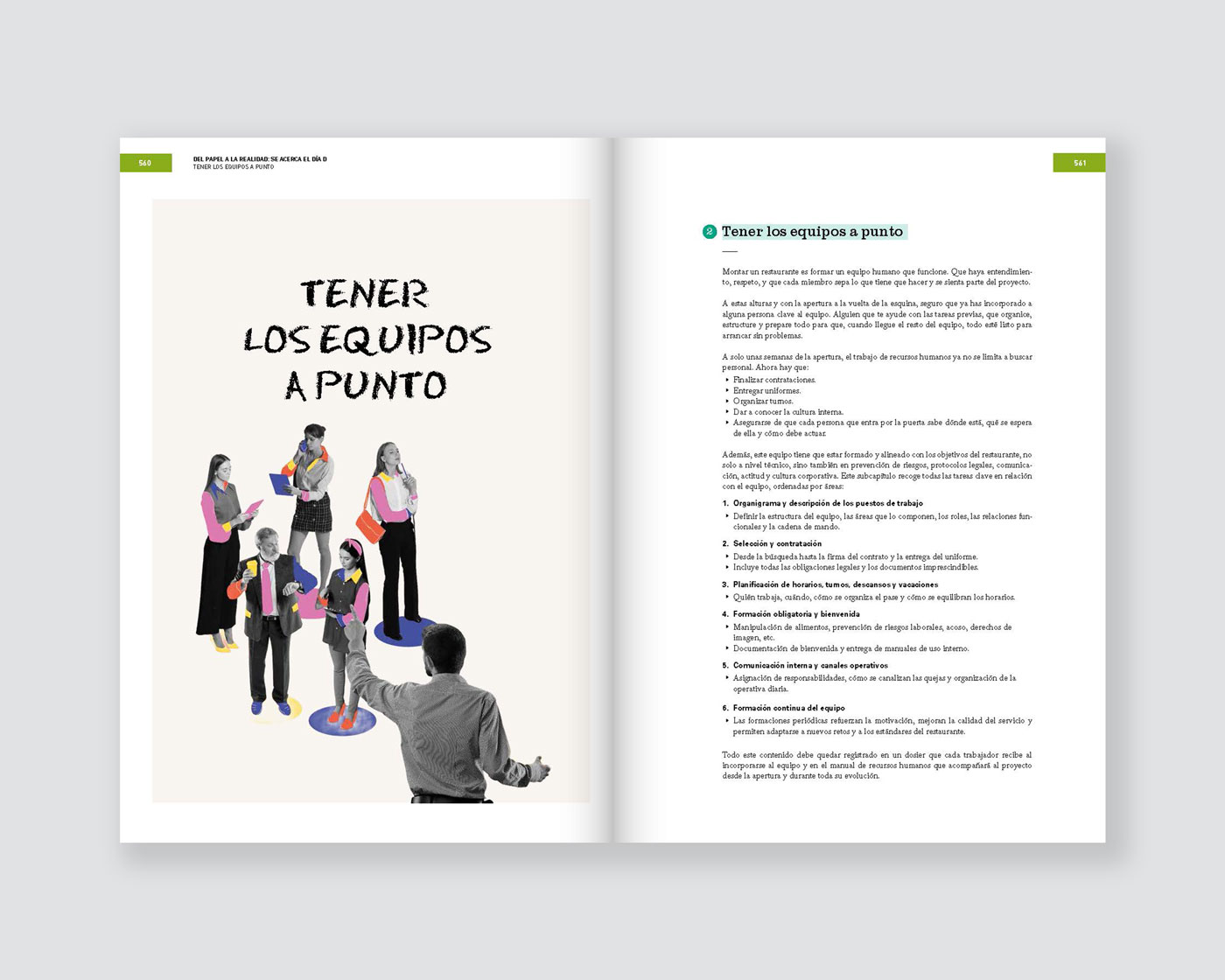
Once the strategic foundations have been defined, the work brings the plan into practice. This part addresses issues such as finding and adapting the premises, developing operational manuals, defining corporate culture and preparing for the opening day. It is the moment when planning turns into operations and the project moves from paper to reality.
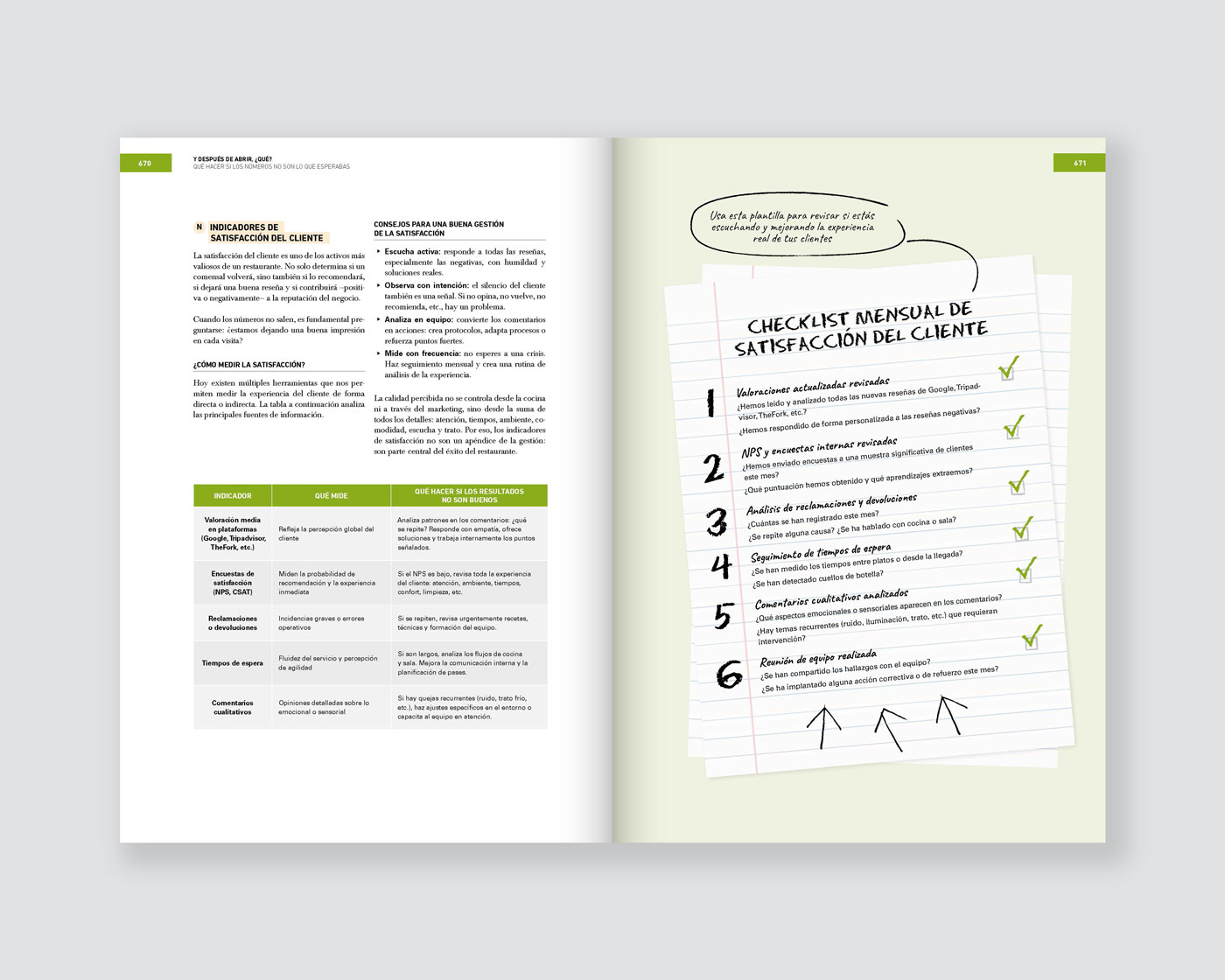
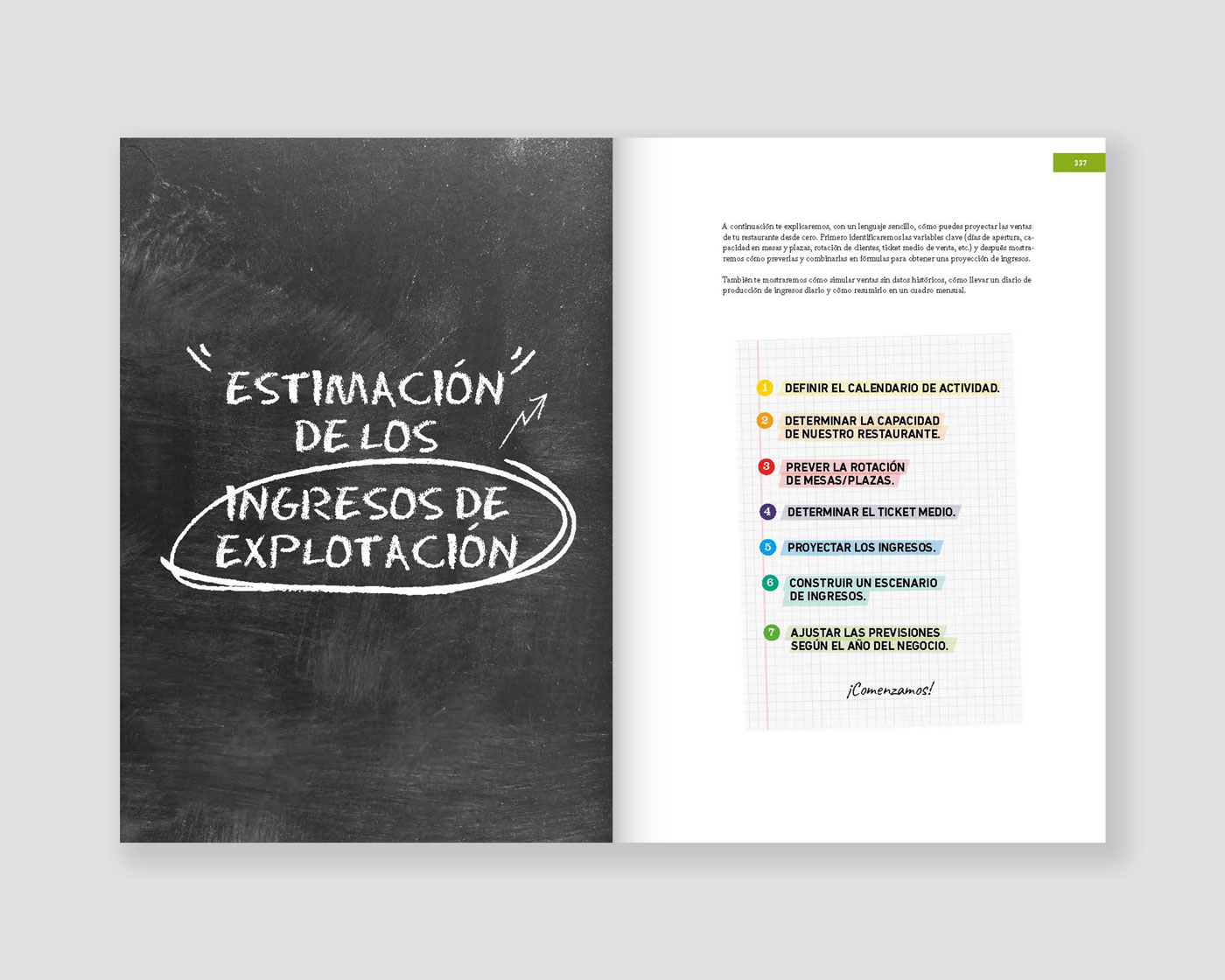
The final section of the book focuses on what happens after opening. Beyond the opening phase, the reader is guided through an understanding of the restaurant’s day-to-day operations, helping to review, adjust and improve the project so that it can evolve and consolidate over time. This section provides the keys to achieving stability and sustained success.
In addition to the book’s content, readers have access to a digital complement designed to facilitate the practical application of the business plan. This ecosystem includes editable templates, operational checklists, videos showing the day-to-day life of a restaurant, observatory reports on the restaurant sector, and resources related to business and innovation terminology.
En esta sección os mostramos un pequeño resumen de cada capítulo del libro
Related products

Italian breakfast
Agotado